
Bluetooth LE SoC for healthcare wearables from Nordic Semiconductor
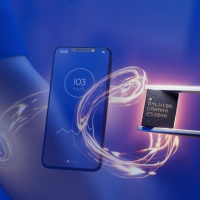
Nordic Semiconductor has introduced the nRF54LV10A, a Bluetooth LE SoC for healthcare wearables that operates directly from a single silver oxide coin cell. The device extends the company’s nRF54L series with a low-voltage option aimed at compact medical sensors such as wearable biosensors and continuous glucose monitors (CGMs). Nordic positions the SoC as a way to increase integration while potentially extending battery life in space-constrained devices.
For eeNews Europe readers, the part is relevant because it directly targets battery- and size-limited medical wearables, a segment where European design teams are under pressure to meet regulatory requirements while enabling remote patient monitoring and hospital-at-home concepts. The SoC’s mix of low-voltage operation, security features and Bluetooth Channel Sounding support could influence future device architectures in this space.
Meeting demand for connected healthcare
Nordic points to strong growth projections for wearable medical devices, with rising remote monitoring and home healthcare deployments pushing demand for miniaturised electronics that can run for long periods from small batteries. Against this backdrop, the nRF54LV10A is positioned for body-worn sensors and discreet medical devices where PCB area and battery capacity are tightly constrained.
“The new nRF54LV10A reflects a clear trend in the healthcare segment, engineered to solve some of the key design challenges for next-generation medical devices,” says Oyvind Strom, EVP Short-Range at Nordic Semiconductor. “Better power efficiency and smaller size are becoming key requirements for CGMs and wearable biosensors. The nRF54LV10 SoC delivers both – setting a new high standard for integration, optimized performance, and extended battery life in the smallest medical devices.”
Low-voltage architecture and security for medical sensors
The nRF54LV10A supports a 1.2 to 1.7 V supply range, enabling direct connection to a single silver oxide coin cell without additional step-down regulation. It is offered in a 1.9 mm by 2.3 mm chip-scale package, which is currently the smallest format in the nRF54L line. Internally, the SoC integrates a 2.4 GHz radio, a 128 MHz Arm Cortex-M33 processor, a RISC-V coprocessor, 1 MB of non-volatile memory and 192 KB of RAM. Nordic states that power consumption is typically 30 to 50 percent lower in common Bluetooth LE use cases compared to an nRF52-series predecessor, which could translate into longer runtime or smaller batteries depending on the design.
Given the sensitivity of medical data, the nRF54LV10A includes security features such as secure boot, secure firmware update, secure storage and a trusted execution environment based on Arm TrustZone. Integrated tamper sensors and a hardened cryptographic accelerator are designed to protect against physical and side-channel attacks, which may be important for devices used in clinical or reimbursed-care settings.
Channel Sounding and nRF54L platform options
Nordic describes the nRF54LV10A as the first low-voltage Bluetooth LE SoC to combine this supply range with support for Bluetooth Channel Sounding. This feature can enable accurate distance measurement, indoor positioning or presence detection, allowing engineers to add location-aware functions such as tracking of patients or assets via their wearable devices in hospitals, care homes or domestic environments.
Within the wider nRF54L series, the nRF54LV10A sits alongside general-purpose multiprotocol SoCs including the nRF54LM20A for high-memory designs and other variants such as the nRF54L15, nRF54L10 and nRF54L05. This gives developers a family path to tune cost, power and feature set while maintaining software reuse. The nRF54LV10A is supported in Nordic’s nRF Connect SDK, with production currently targeted for Q2 2026 and access via an early-access programme for development kits and samples.
Engineers in Europe working on healthcare wearables, CGMs and other battery-operated biosensors may therefore treat the device as a candidate platform where low-voltage operation, integrated security and Bluetooth LE SoC for healthcare wearables requirements intersect.